

Flooring Guide · Herringbone
How to Choose Herringbone Flooring: Patterns, Materials & Buying Guide
Herringbone is the most-requested pattern we're asked about, and also the one that creates the most confusion. Real wood or vinyl? Herringbone or chevron? Single or double? This guide answers the questions homeowners actually ask, in plain language, before you commit.
Before You Choose
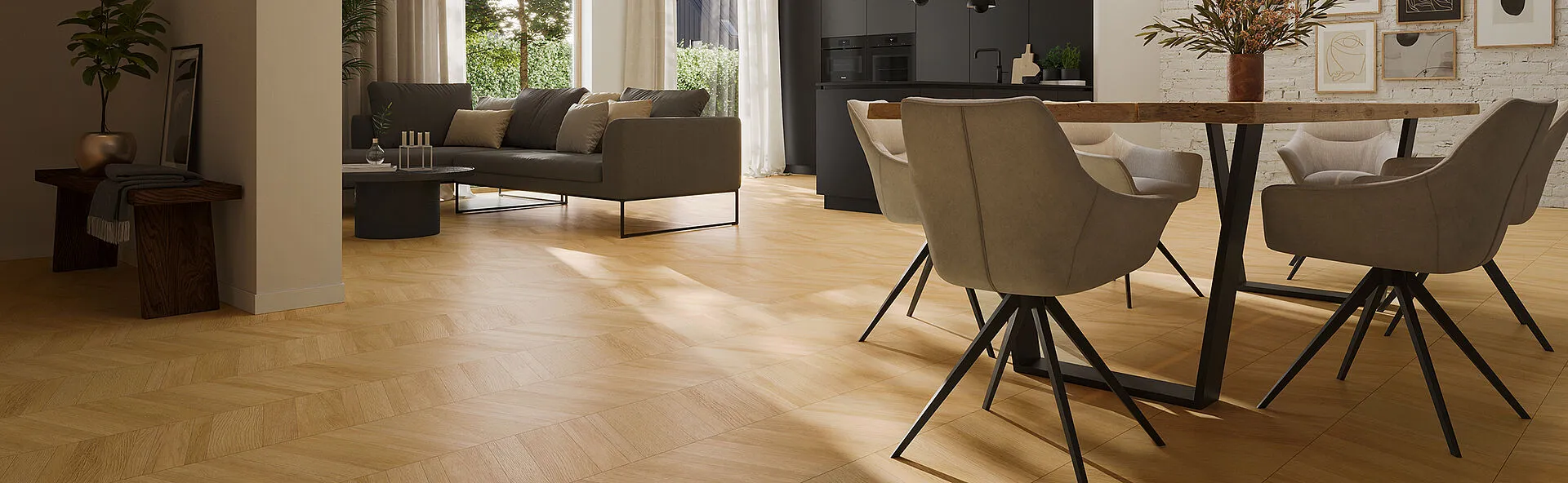
A statement floor, but only if you choose it well
Herringbone can transform a room. It can also be an expensive mistake if the material, pattern or room is wrong. The good news: once you understand a few simple distinctions, the decision becomes straightforward.
This guide is for the planning stage, when you've decided you like the look of herringbone but haven't committed to a material, a pattern or a budget yet.
We'll cover the difference between herringbone and chevron, the four materials it comes in and who each one suits, the rooms it works best in, and an honest look at what drives the cost, so there are no surprises. When you're ready to see and feel the actual ranges, we've linked through to each one.
No jargon, no upselling, just the things that genuinely change the outcome of a herringbone floor.
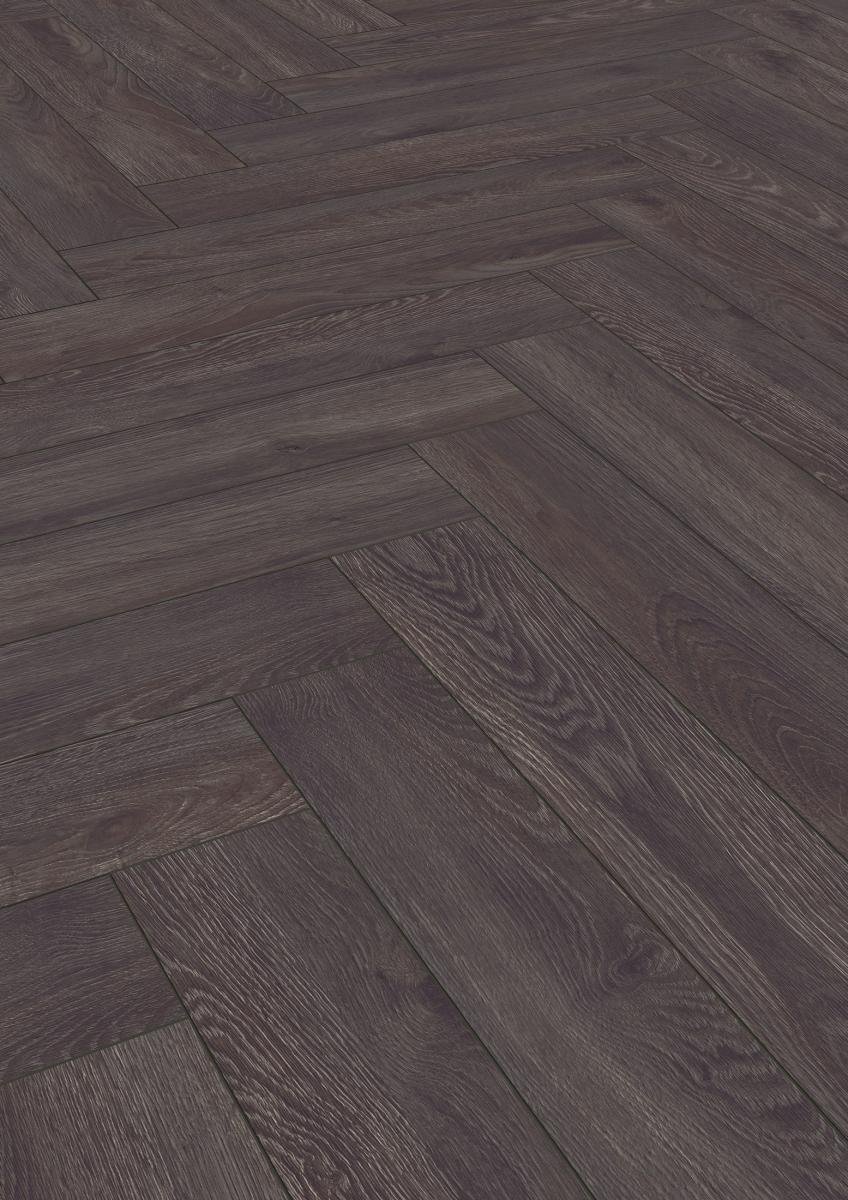
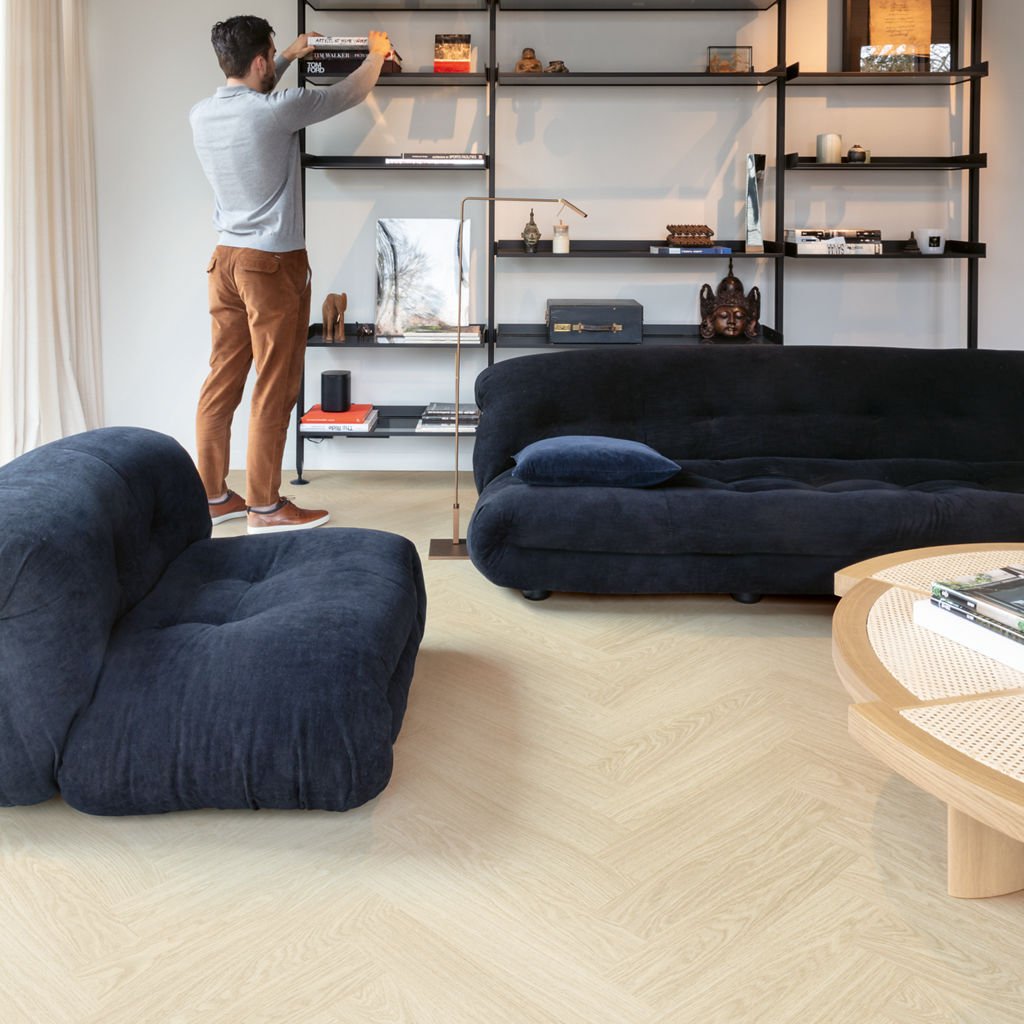
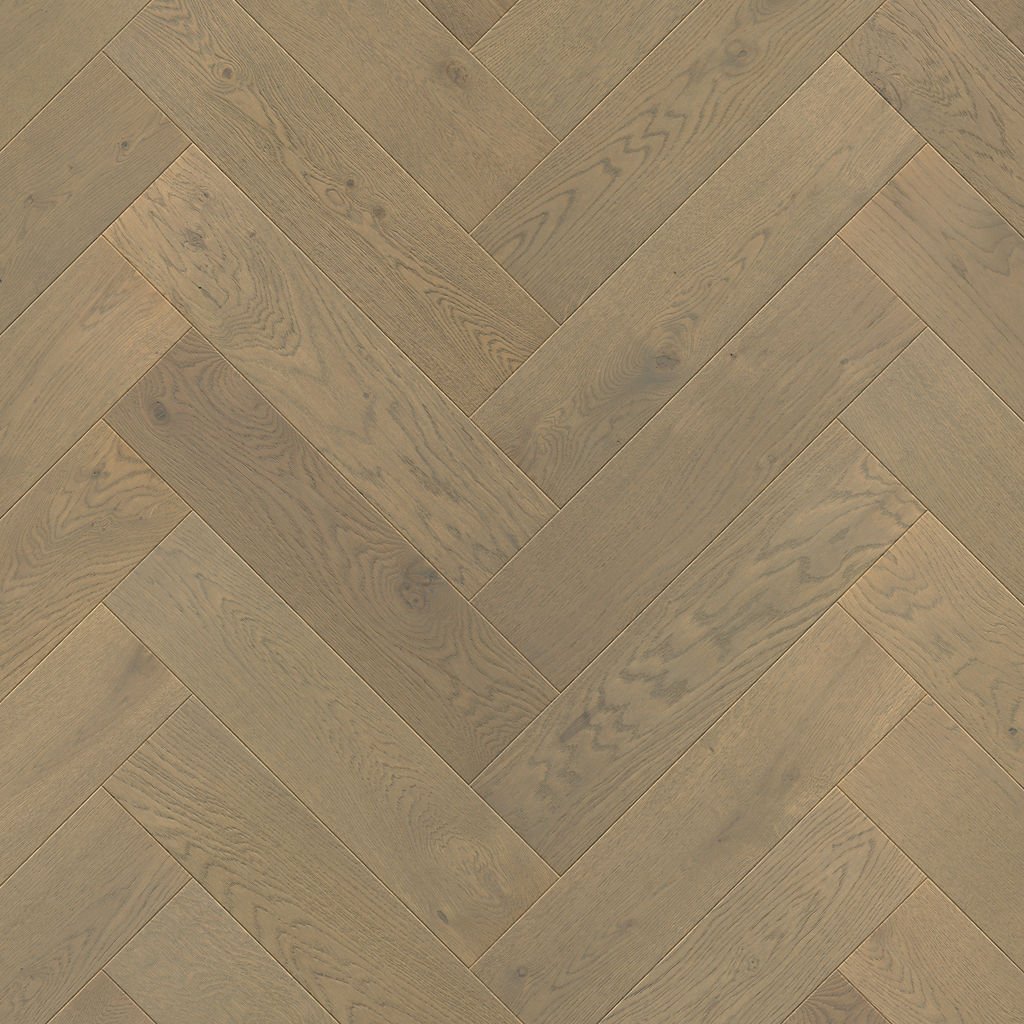 The classic 90° herringbone arrangement
The Basics
Herringbone vs chevron: the difference that matters
They look similar at a glance, but they're laid completely differently, and the distinction affects both the look and the fitting.
In a herringbone floor, rectangular planks meet at a 90-degree angle: the end of one plank sits against the side of the next, creating a broken, woven zig-zag. In a chevron floor, the planks are cut at an angle and meet point-to-point, forming a continuous, seamless V. Herringbone feels classic and characterful; chevron feels sharper and more contemporary.
Rule of thumb: if you want timeless, choose herringbone. If you want modern and don't mind the extra cutting work, look at chevron.
Material By Material
The four herringbone materials, and who each one is for
The pattern is the same. The material underneath it changes everything about durability, performance and where it can go.
 Most Popular
Real Wood Surface · Stable Core
Engineered Wood Herringbone
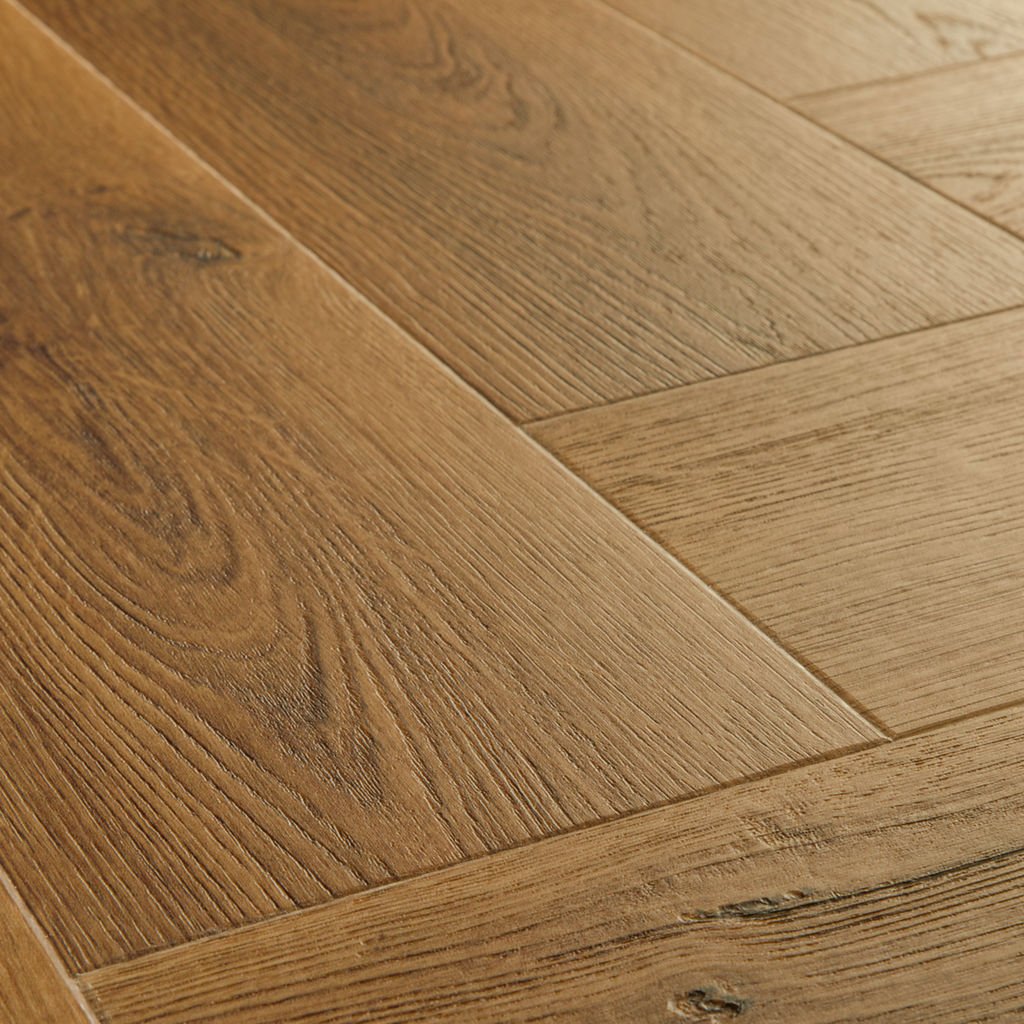
A genuine oak top layer bonded to a stable plywood core. It looks and feels exactly like solid wood, but copes far better with the temperature and humidity swings of Irish homes, and crucially, it works with underfloor heating. For most people, this is the sweet spot.
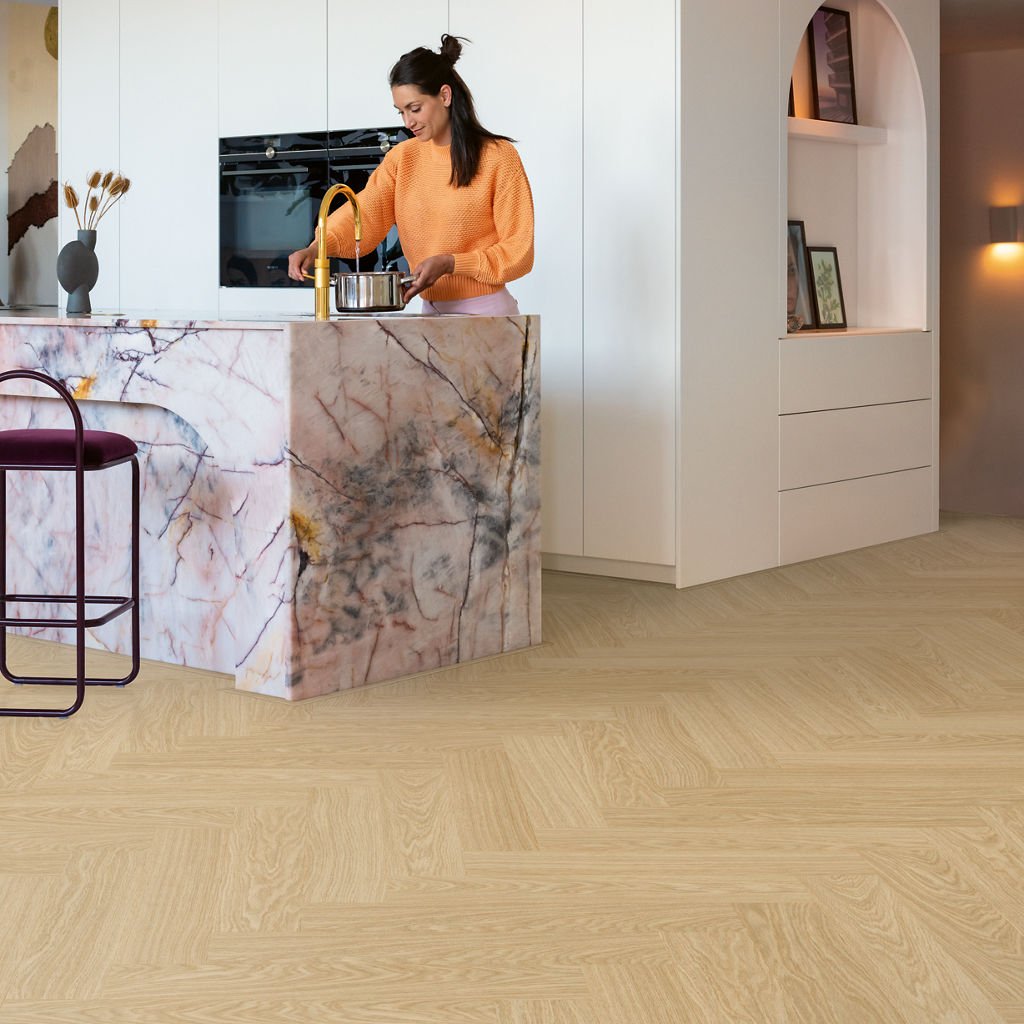 Waterproof
Tough · Waterproof · Forgiving
Vinyl & LVT Herringbone
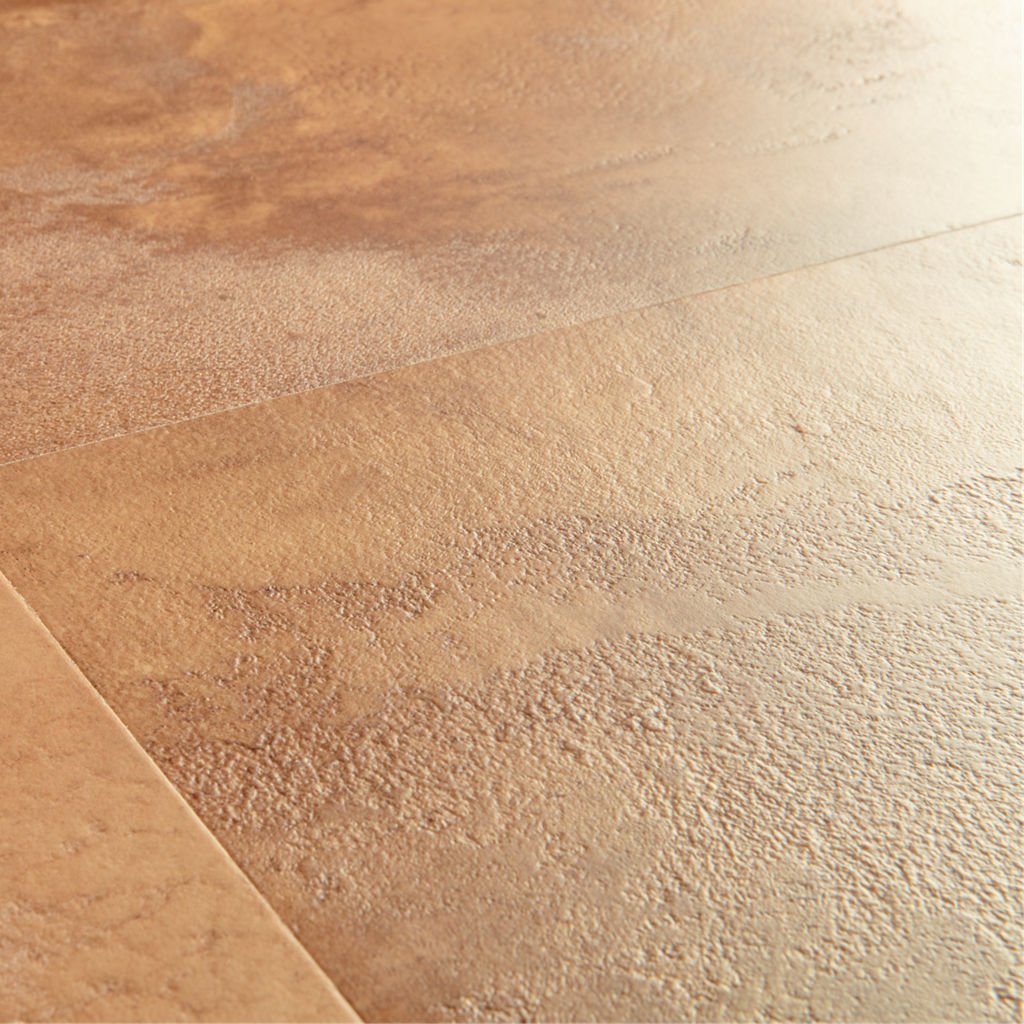
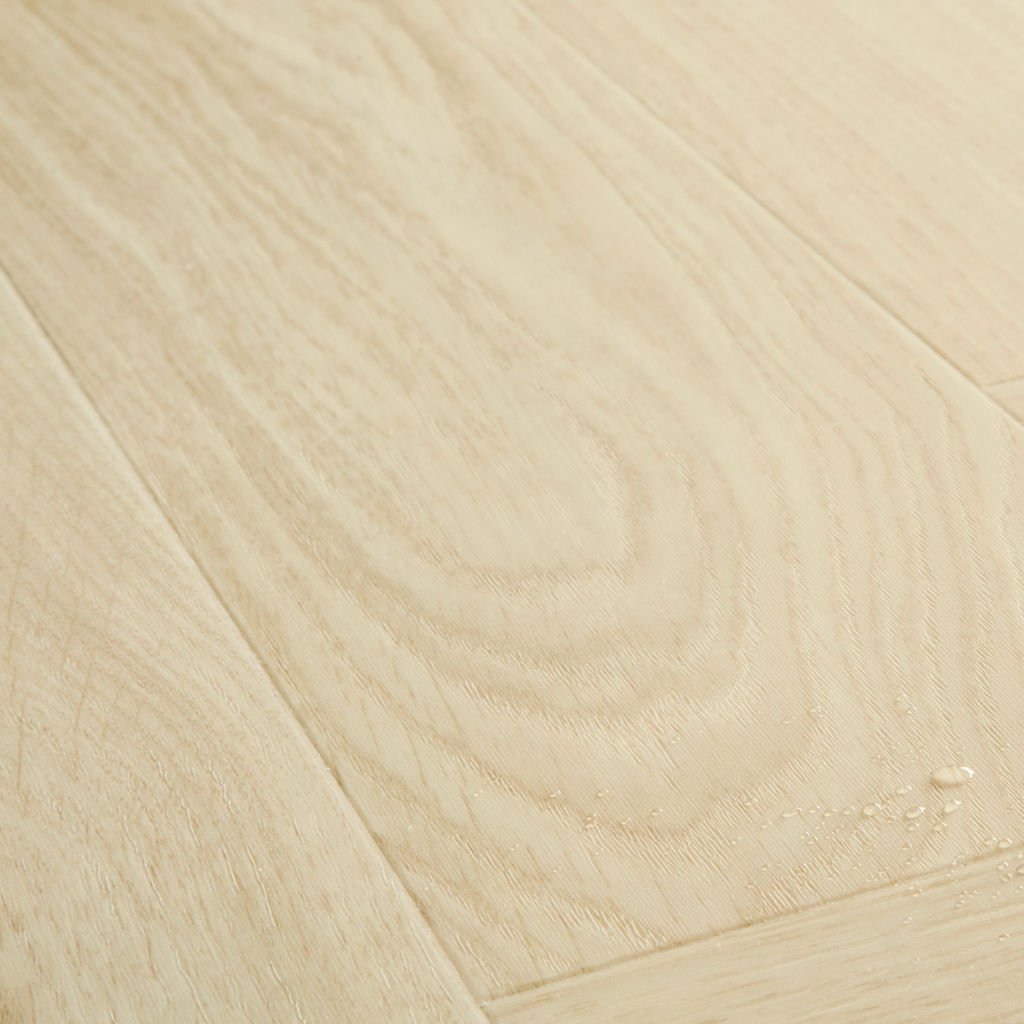
Luxury vinyl tile (LVT) and herringbone vinyl give you the look with full waterproofing and serious durability. Modern wood-effect vinyl is remarkably convincing, and it shrugs off spills, pets and heavy traffic, which is why it's the smart pick for kitchens, utilities and busy family spaces.
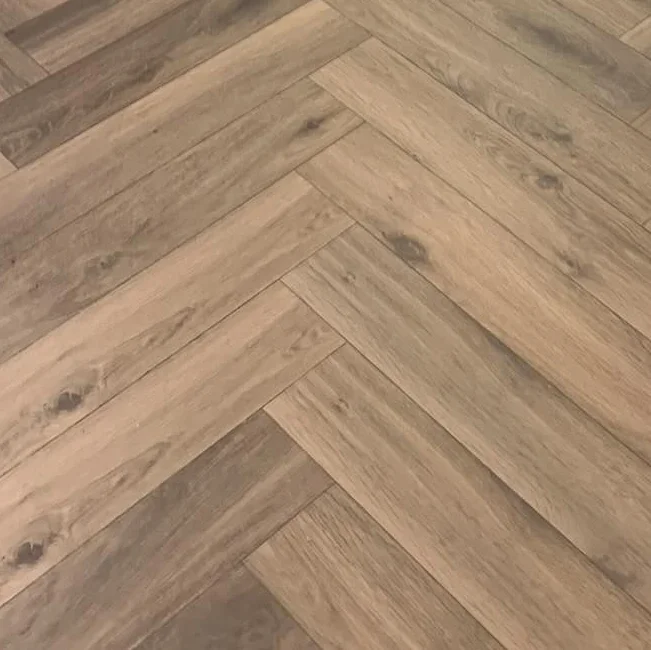 Premium · Traditional
The Traditional Choice
Solid Wood Herringbone
Solid timber throughout, with all the character and longevity that brings. It's the most traditional option and can last generations, but it's sensitive to humidity and generally not recommended over underfloor heating, so it suits older, well-ventilated properties more than modern builds.
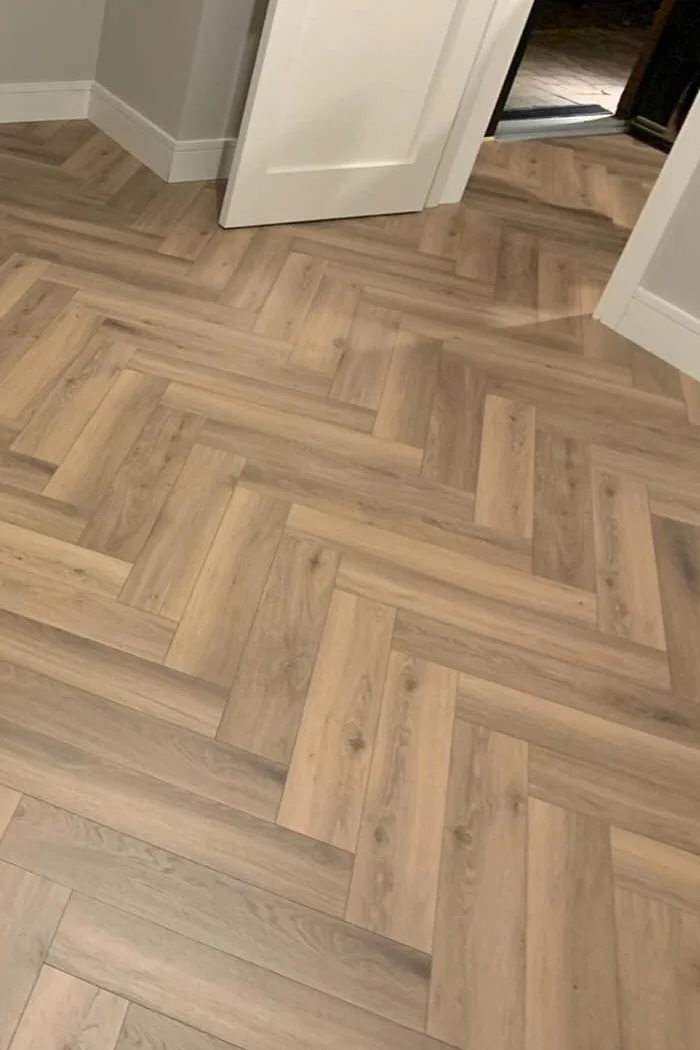 Best Value
The Look For Less
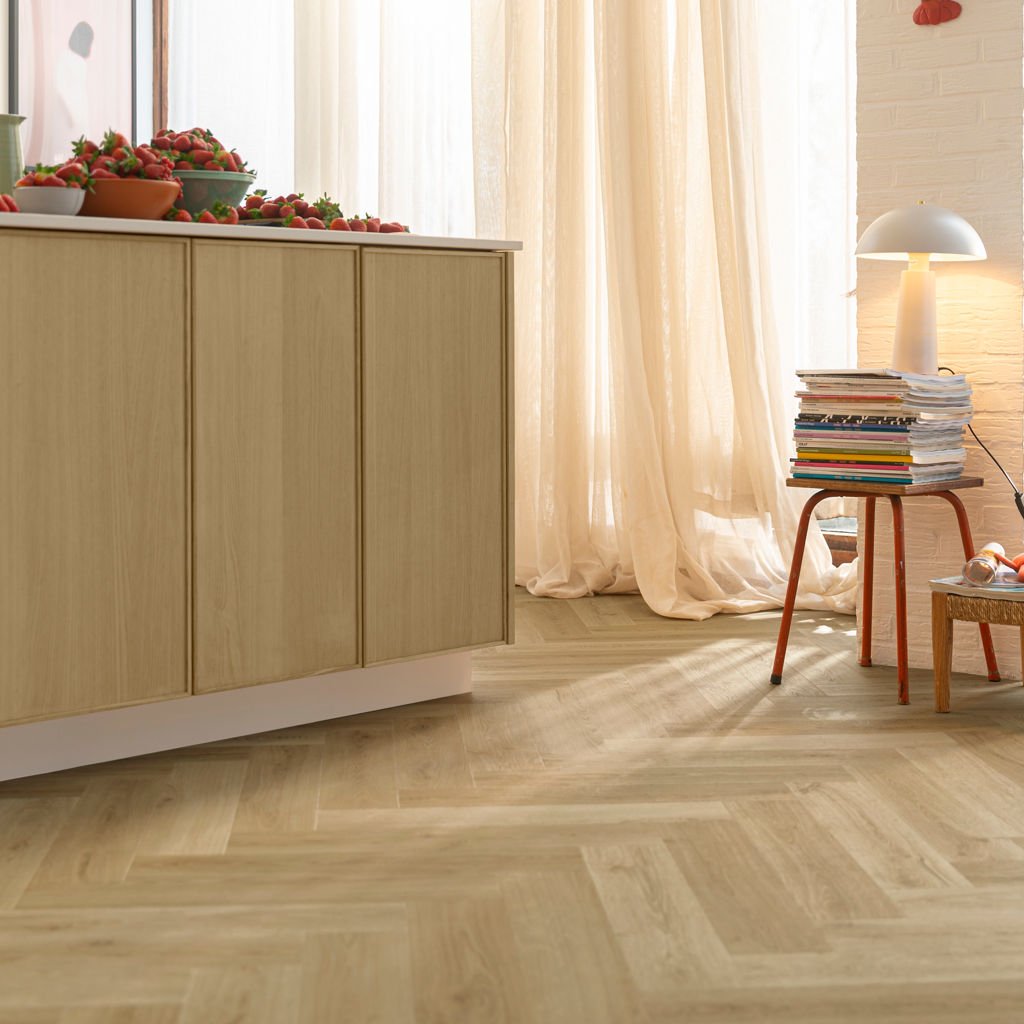
Laminate Herringbone
A photographic wood-effect layer over a dense core gives you the herringbone look in the most budget-friendly form. Quality varies a lot, so it's worth choosing a good range, but for full-house refits, rentals and budget-conscious projects, laminate herringbone is hard to beat.
Beyond The Basics
Pattern & style choices that change the look
Once you've chosen a material, these are the details that make a herringbone floor feel either classic, contemporary or completely bespoke.
What Affects The Cost
What affects the cost of herringbone flooring?
Two things drive it: the material you choose, and the fitting, because a herringbone pattern takes longer to lay than straight plank. Here's how the four materials compare on the things that matter most.
| Material | Key strength | Best for |
|---|---|---|
| Laminate | Most budget-friendly look | Refits, rentals, tighter budgets |
| Vinyl / LVT | Fully waterproof | Kitchens, utilities, busy family rooms |
| Engineered Wood | Real wood, stable over UFH | Halls, living & open-plan downstairs |
| Solid Wood | Premium, refinishable | Period homes without underfloor heating |
Fitting matters as much as the material. Herringbone takes longer and more skill to lay than straight plank, and it uses more material in offcuts (a higher waste allowance), so fitting is a bigger part of the job. Chevron is a little more involved again because of the angled cuts. For an accurate figure, the only reliable route is a measured quote based on your actual rooms and subfloor.
Quick Answers
The questions people ask before choosing herringbone
Short, direct answers to the things that come up most often when planning a herringbone floor.
Making The Call
Four questions that decide your herringbone floor
Work through these in order and the right material and pattern usually become obvious.
"Herringbone is the one floor people almost never get right from a screen: the scale and tone only make sense in person."
See It Before You Choose
Why herringbone is worth seeing in person
Pattern scale, plank width, tone, the way light catches the angles: none of it translates properly online. A range that looks perfect on a phone can feel completely different across a real floor. Seeing samples side by side, at scale, is the single best way to avoid an expensive mistake.
Frequently Asked
Herringbone flooring: full FAQ
What is the difference between herringbone and chevron flooring? +
In herringbone, rectangular planks meet at a 90-degree angle, with the end of one plank against the side of the next, creating a broken zig-zag. In chevron, the planks are cut at an angle and meet point-to-point to form a continuous V. Herringbone is more traditional and a little more forgiving to fit; chevron is more contemporary and usually a little more involved to lay because of the angled cuts.
What affects the cost of herringbone flooring? +
Two things: the material you choose and the fitting. A herringbone pattern is slower and more skilled to lay than straight plank, and it uses more material in offcuts, so fitting is a bigger part of the job. Chevron is a little more involved again because of the angled cuts. See the cost factors above, and request a measured quote for an exact figure.
Why is herringbone more involved to fit than straight plank? +
Mostly because of the fitting, not the material. The planks are similar to standard planks in the same range, but the pattern is slower and more skilled to lay, and it uses more material in offcuts (a higher waste allowance). Chevron is a little more involved again because of the angled cuts.
Which herringbone material is best for a kitchen? +
For kitchens, vinyl or LVT herringbone is usually the best choice because it's fully waterproof and copes with spills and traffic, while still looking convincingly like wood. Engineered wood can work in a careful kitchen, but vinyl is the safer, lower-maintenance option. Explore vinyl herringbone.
Can herringbone go over underfloor heating? +
Yes, with engineered wood, LVT or laminate, all designed to stay stable across temperature changes. Solid wood is generally not recommended over underfloor heating because it can move and gap. See engineered wood options.
Which direction should herringbone flooring run? +
There's no single rule, but the most effective approach is to run the pattern toward the main source of natural light, or down the length of a hallway. This emphasises the floor's lines and makes the space feel longer and more open. It's worth planning this with your fitter before installation.
Is herringbone a good choice for a small room? +
It can be, but choose a finer scale (narrower blocks and a single pattern) so it doesn't overwhelm the space. In very small or narrow rooms a large-scale or double herringbone can feel busy. When in doubt, a smaller block and a lighter, natural tone keeps it feeling open.
Where can I see herringbone ranges in person? +
You can compare engineered, vinyl, laminate and solid wood herringbone side by side at our showroom, and take samples home before deciding. Browse the herringbone range or book a visit to see them at full scale.
Royal Wood Flooring Company
Found the herringbone look you want?
Now see it in real life. Compare engineered, vinyl, laminate and solid wood herringbone side by side, get an honest fitted quote, and take samples home before you commit. It's the surest way to get a floor you'll love for years.