

Kitchen flooring
Kitchen Flooring in Dublin: What Actually Survives a Busy Kitchen
Spills, dropped pans, wet coats and a dishwasher that will leak one day. Here is what holds up, and the one distinction most kitchen floors are sold on incorrectly.
Choosing a Floor That Can Handle an Irish Kitchen
A kitchen asks more of a floor than any other room in the house. It gets the most foot traffic, the most dropped objects, and almost all of the water. Choosing well is less about picking a look and more about understanding how each material behaves when it gets wet, because that is what separates a floor that lasts fifteen years from one that lifts at the edges after two.
The short answer: for most Dublin kitchens, LVT or SPC vinyl and porcelain tiles are the safest choices, because both are genuinely waterproof. Water-resistant tile-effect laminate works very well in a kitchen too, provided spills are wiped up rather than left to stand. Carpet and solid wood are the two to avoid.
The one thing to get right
Water-Resistant Is Not the Same as Waterproof
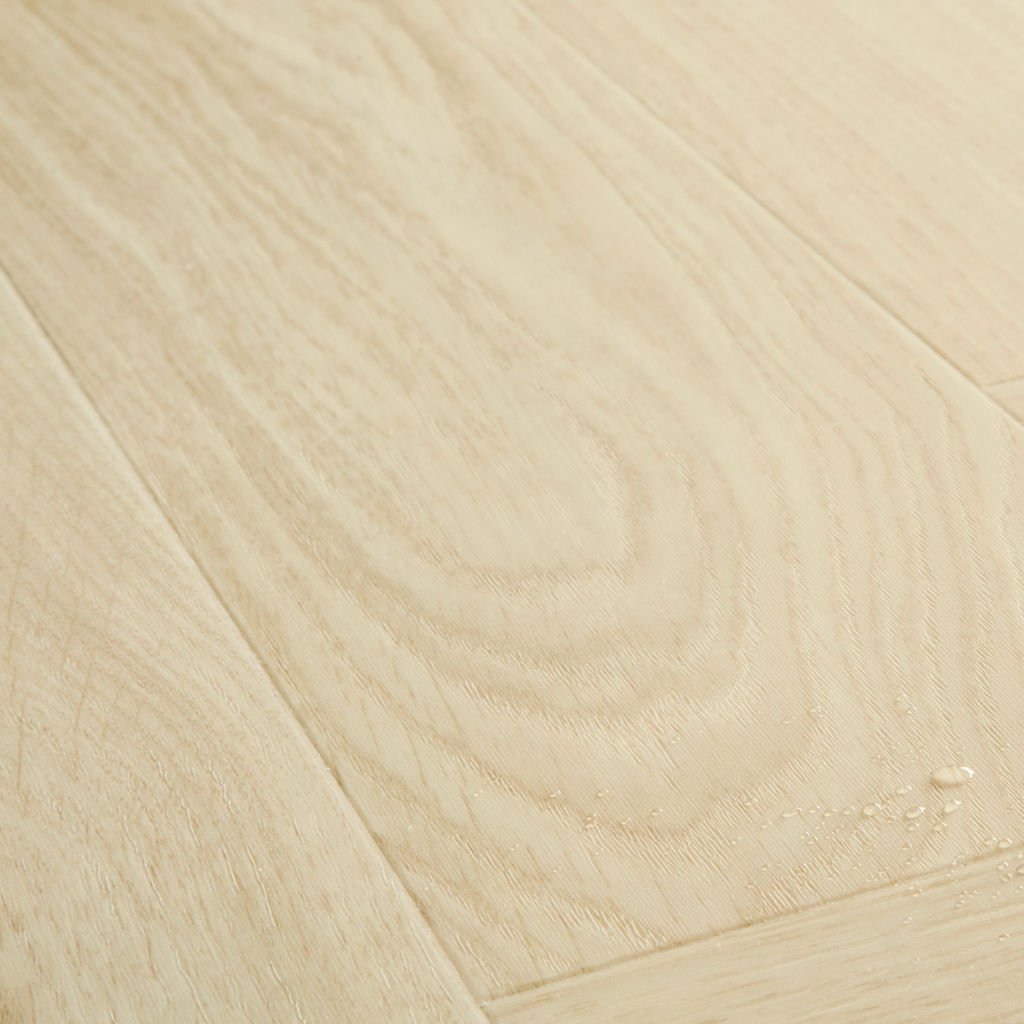
This is the single most useful thing to understand before you choose, and the two words are used loosely almost everywhere. Water-resistant means the surface and the joints repel water for a period, so spills wiped up promptly do no harm. Waterproof means the material itself cannot be damaged by water, however long it sits there.
The difference comes down to what is underneath the picture. Laminate is built on a compressed wood-fibre core. A quality water-resistant laminate seals that core and treats the joints, which handles the realities of kitchen life perfectly well. But if water gets past the seal and reaches the core, the board swells, and that swelling does not reverse. LVT, SPC and porcelain have no absorbent core to swell, so standing water is an inconvenience rather than a repair.
Neither is automatically the right answer. A water-resistant laminate in a normal family kitchen is a sound, good-value choice. It is the leak you do not notice for a weekend that decides whether that mattered.
What a Kitchen Floor Has to Cope With
Kitchen floors rarely fail in the middle of the room. They fail at the sink run, at the dishwasher, and at the back door. Knowing where the pressure actually falls tells you which compromises are safe to make and which are not.
Standing water, not just splashes
The dishwasher, the sink run and the washing machine are where kitchen floors actually fail.
Point impact
A dropped pan or a tin from a worktop is a concentrated hit. Some hard surfaces chip, softer ones absorb it.

Grit at the back door
In most Irish homes the kitchen is the route in from the garden. Grit underfoot scratches more floors than anything else.
Standing time underfoot
You stand still in a kitchen more than anywhere. Tile is hard and cold underfoot unless it has heating below it.
Tile-Effect Laminate in a Kitchen
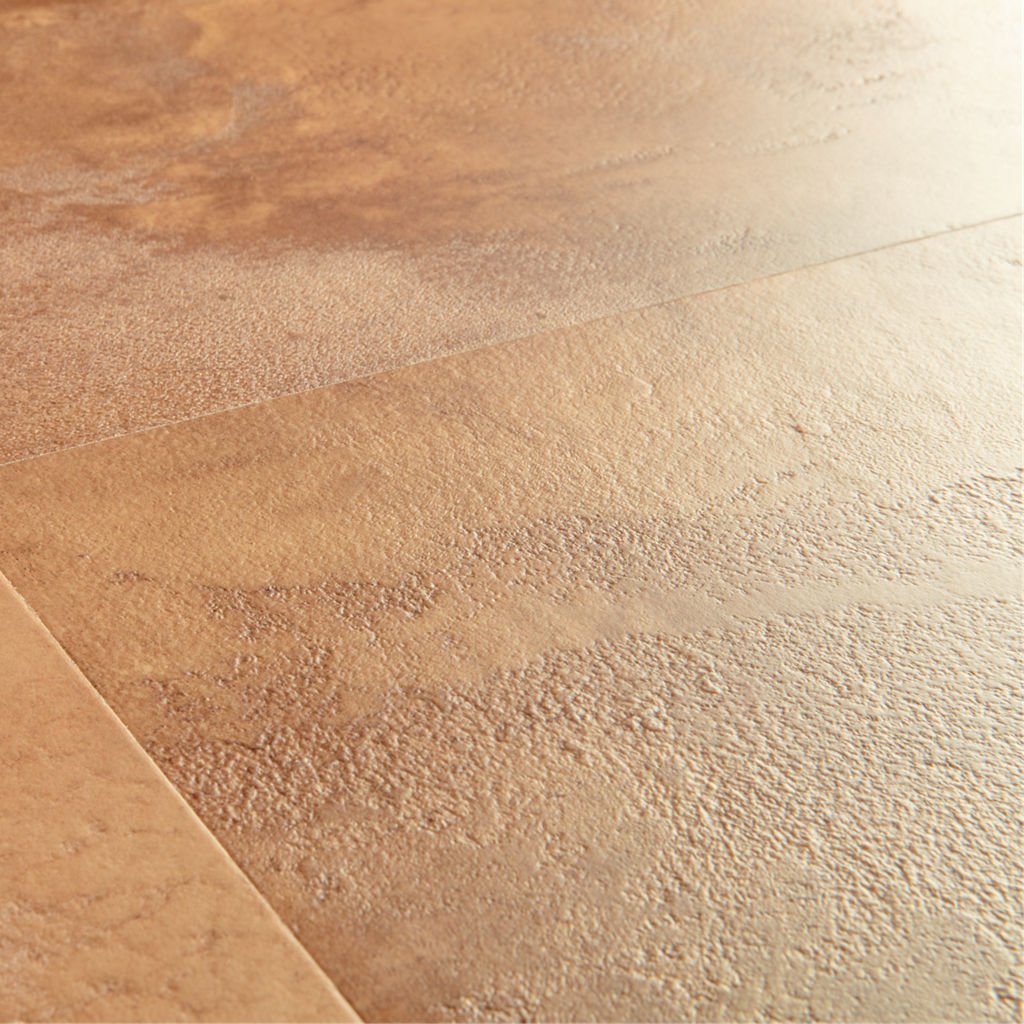
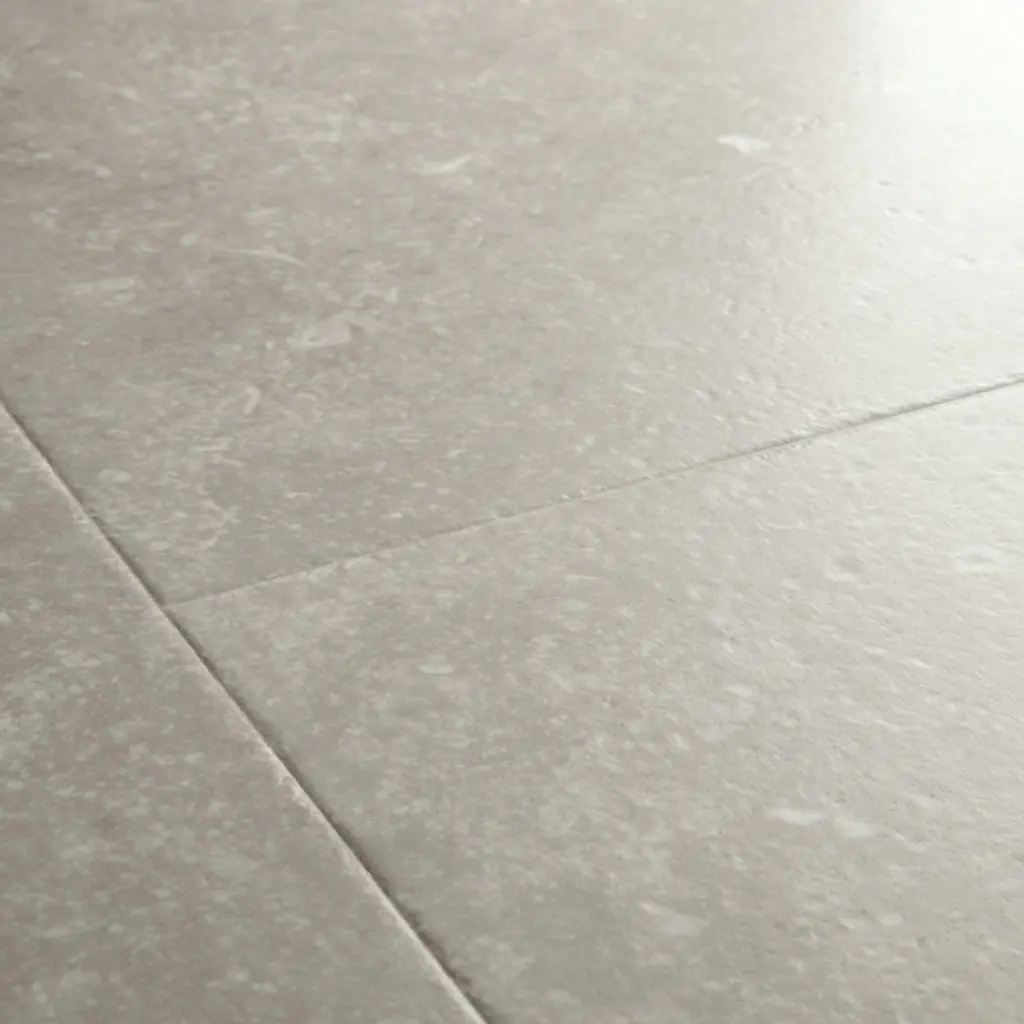
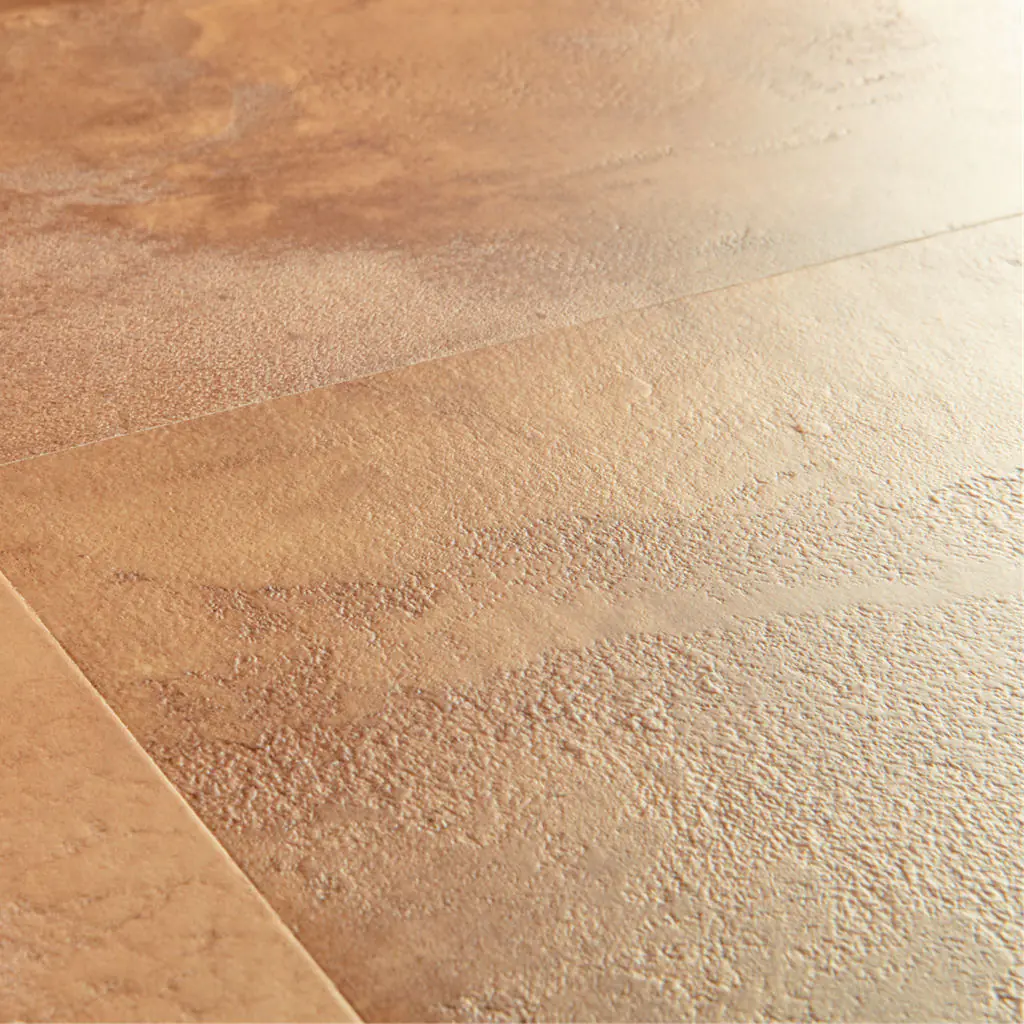
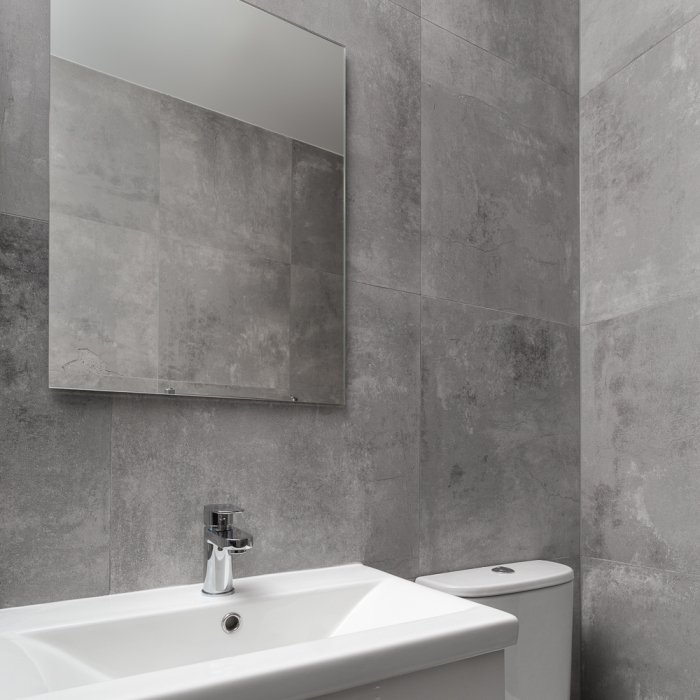
Tile-effect laminate gives you the look of stone or ceramic with the warmth and quiet of laminate, and it is usually the most affordable way to get a tiled appearance. Bevelled edges imitate grout lines, and the surface is scratch and stain resistant, which suits a room where things get dropped.
In a kitchen it performs well on every count except one: prolonged standing water. Choose a water-resistant range, have the perimeter and any appliance recesses sealed properly at fitting, and wipe spills rather than leaving them.
Family kitchens, kitchen-hallway runs and utility spaces where you want a tiled look with warmth underfoot and a lower budget.
LVT and SPC Vinyl
If you want the least amount of thinking about water, this is it. LVT and SPC have no absorbent core, so a dishwasher that quietly leaks overnight is a mopping job rather than a replacement. They are warm and quiet underfoot, and modern wood and stone visuals are convincing at floor level.
- Waterproof core, so standing water cannot swell it
- Warm and quiet underfoot with a slight give
- Stands up to grit at a back door
- The subfloor must be flat or it telegraphs through
- Any quote that does not mention levelling is not complete
Porcelain and Ceramic Tiles
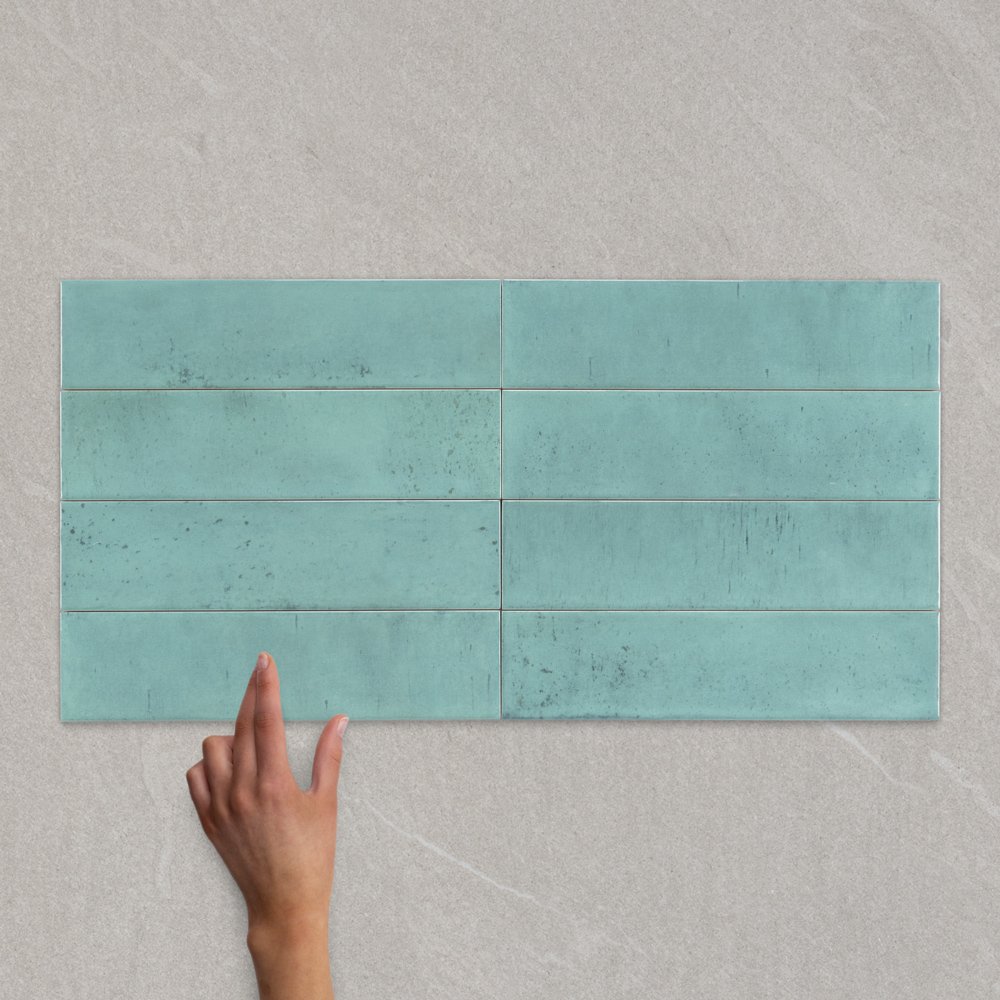
Tiles remain the traditional kitchen answer for good reason. Porcelain is dense and effectively impervious, it will not stain from cooking oils, and a well-laid tiled floor will outlast most of the kitchen fitted above it. It is also the natural partner for underfloor heating, which solves its one real drawback.
- Tile is unforgiving underfoot, for standing and for anything dropped
- Grout is the part that ages, so ask about sealing and colour near the hob
➝ Browse ceramic tiles
Engineered Wood in a Kitchen-Diner
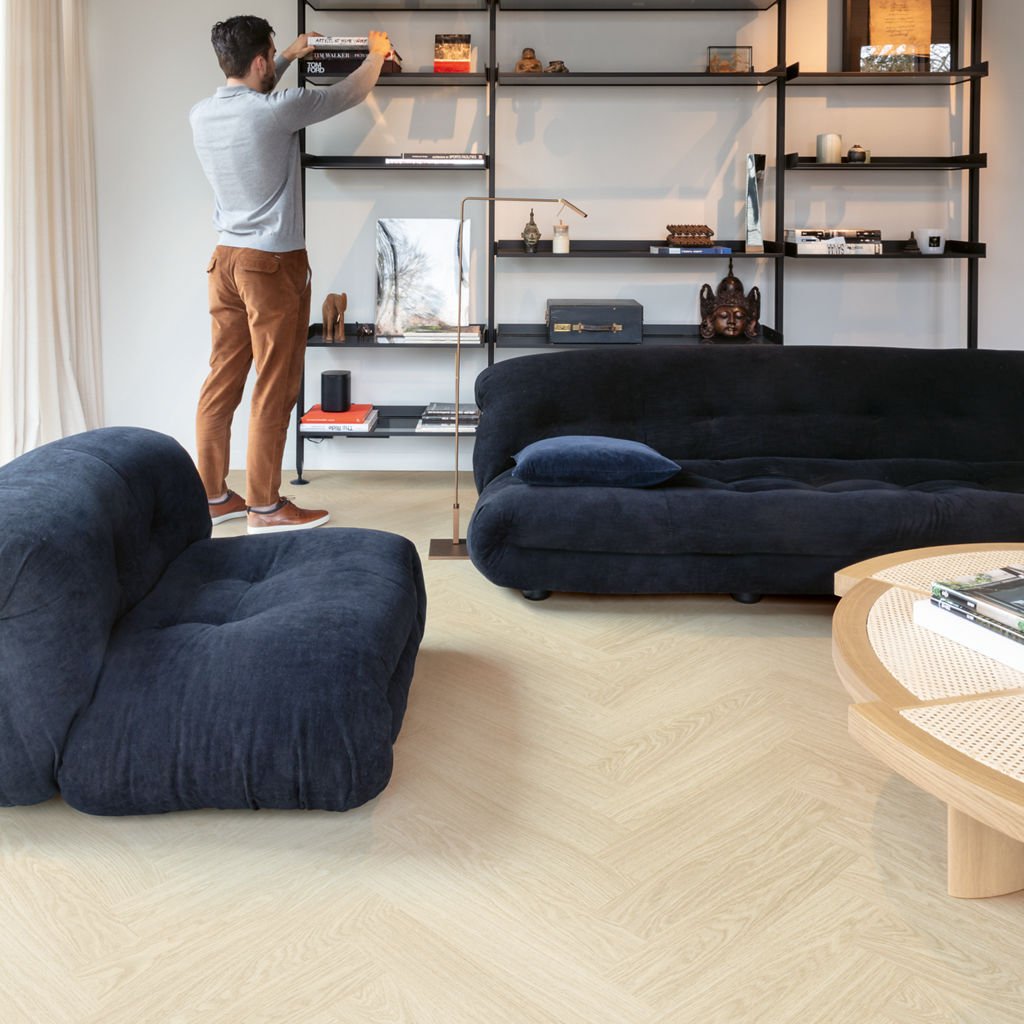
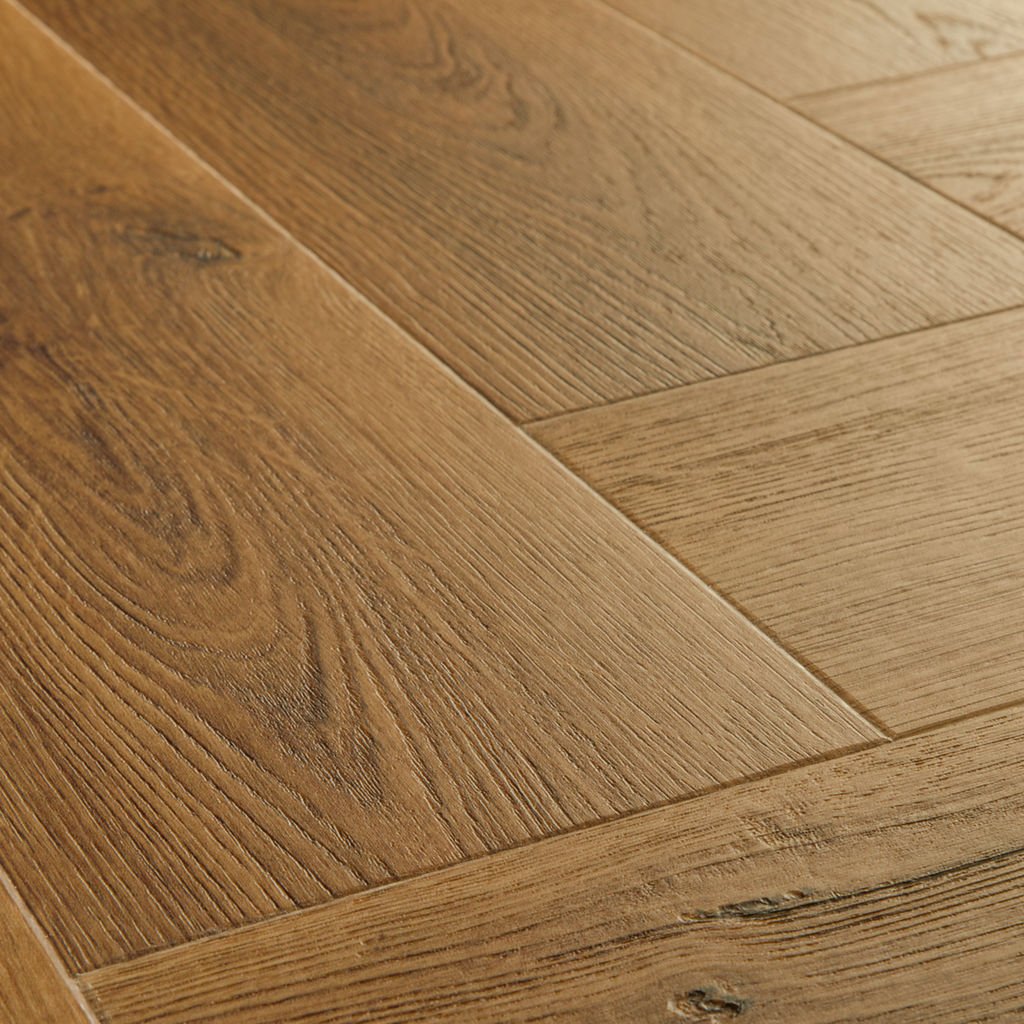
Where the kitchen opens into a dining or living space, a single floor running through makes the room read as one. Engineered wood lets you do that without solid timber, because its layered construction is far more stable through the humidity swings of an Irish year.
It is still real wood, so treat the wet zone with respect. Many homeowners run engineered wood through the dining half and use tile or LVT in the working run along the sink and appliances, with a neat threshold between. That is a sound compromise rather than a fudge.
➝ See engineered wood flooringKitchen Flooring Comparison
| Flooring | Water behaviour | Underfoot | Kitchen verdict |
|---|---|---|---|
| LVT / SPC vinyl | Waterproof core | Warm, quiet, slight give | Excellent |
| Porcelain tile | Effectively impervious | Hard and cold without heating | Excellent |
| Tile-effect laminate | Water-resistant, not waterproof | Warm, quiet | Very good with prompt wiping |
| Engineered wood | Tolerates humidity better than solid | Warm, natural | Good in a kitchen-diner |
| Carpet | Absorbs and holds | Soft and warm | Not recommended |
Five Things to Settle Before You Order
- Ask what the warranty says about water, not whether the floor is waterproof. The wording in the manufacturer's warranty is the honest answer, and it varies by range.
- Decide whether the floor goes under the units or up to them. Floating floors such as laminate and click LVT need room to expand and should not be trapped under kitchen units. Tiles are usually laid first. This affects your measurements and your cost.
- Confirm underfloor heating compatibility for the specific range, along with the maximum surface temperature. Compatibility is not universal, and exceeding it voids warranties.
- Budget for subfloor preparation. Levelling is the step people leave out of comparisons, and it is the step that determines whether a thin floor looks right in three years.
- Think about the threshold at the back door. Grit tracked in from outside causes more visible wear than anything in the room. A mat well or a barrier mat protects the whole floor.
Kitchen Flooring Questions We Are Asked Most
Is tile-effect laminate flooring waterproof?
Most tile-effect laminate is water-resistant rather than fully waterproof. The surface and joints repel spills, but the fibreboard core can swell if water reaches it and sits there. In a kitchen it performs well when spills are wiped promptly and the perimeter is sealed correctly at fitting.
Can you put laminate flooring in a kitchen?
Yes. A water-resistant laminate is a common and sensible kitchen floor across Ireland, offering warmth underfoot and a tiled look at lower cost. The two conditions are prompt wiping of spills and proper sealing around appliances and the perimeter during installation.
What is the best flooring for a kitchen in Ireland?
LVT or SPC vinyl and porcelain tile are the strongest all-round choices, because both are genuinely waterproof and handle Irish humidity without movement. Water-resistant tile-effect laminate is an excellent value alternative for family kitchens where spills are dealt with quickly.
Should I use laminate or vinyl in a kitchen?
Choose vinyl if water is a real concern, for example under a dishwasher or beside a back door, because its core cannot swell. Choose laminate if you want the warmest, most affordable tiled look and are confident spills will not be left standing.
Can kitchen flooring go over underfloor heating?
Often yes, but it depends on the specific range rather than the material in general. Porcelain tile is the most efficient partner for underfloor heating. Always confirm compatibility and the maximum surface temperature for the exact product, because exceeding it can void the warranty.
Is carpet ever suitable in a kitchen?
We would not recommend it. Carpet absorbs spills and holds cooking odours and moisture, which makes hygiene difficult in the one room where both are constant. Carpet is far better suited to bedrooms, living rooms and stairs.